
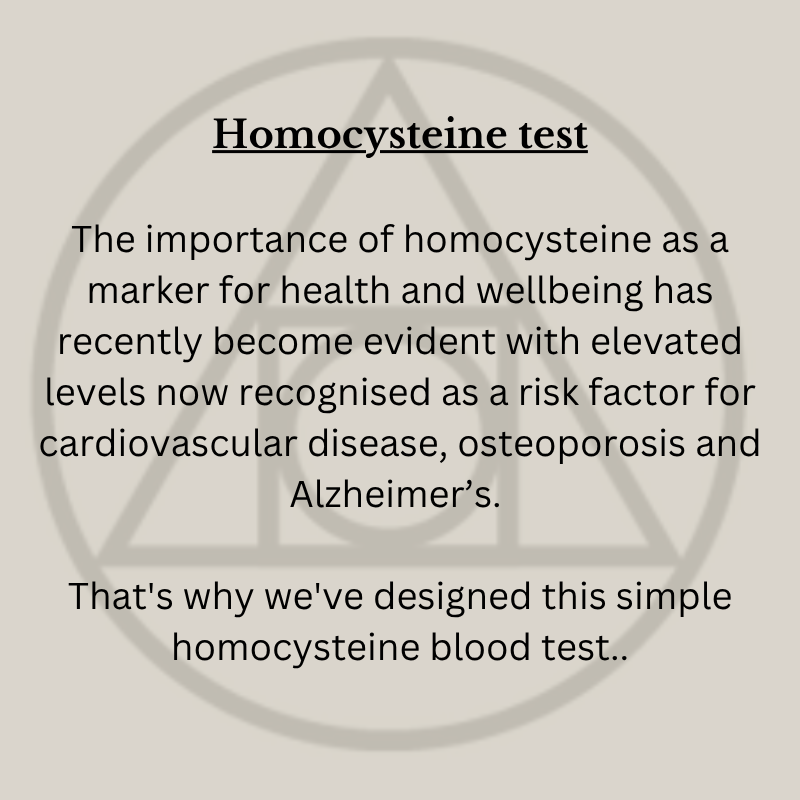
The importance of homocysteine as a marker for health and wellbeing has recently become evident with elevated levels now recognised as a risk factor for cardiovascular disease, osteoporosis and Alzheimer’s. That’s why we’ve designed this simple homocysteine blood test.
$49.00 incl. GST
Brand: iScreen
Used for: Anxiety, Brain function, Cardiovascular, Depression, Detoxification, Fatigue, Healthy Ageing, Heart Health
Categories: Brain Health, Detoxification, Energy, Heart Health, Stress
A risk factor for heart disease and Alzheimer’s
Homocysteine is produced as part of the body’s methylation process and is used to make protein and maintain tissue. In healthy cells homocysteine is quickly converted to other products, but build up of homocysteine in the blood can increase the risk of stroke, heart disease, and even Alzheimer’s. Homocysteine blood test levels have been found to be a better measure of risk for cardiovascular disease, especially in older people, than conventional factors such as smoking, cholesterol or raised blood pressure. Raised homocysteine blood test levels are also linked to Alzheimer’s, dementia, declining memory, poor concentration and judgment and lowered mood.
The complex metabolism of homocysteine depends on vitamin B12, folate and vitamin B6, and deficiencies in these vitamins can lead to raised homocysteine blood test levels. Other factors thought to raise homocysteine levels are poor diet, poor lifestyle (especially smoking and high coffee and alcohol intake), some prescription drugs (such as proton pump inhibitors), diabetes, rheumatoid arthritis and poor thyroid function. Many people can lower their homocysteine blood test levels through changing their diet, in particular by reducing their protein intake and increasing their intake of B vitamins.
Homocysteine is an amino acid that’s regulated by the body’s methylation process, which supports detoxification, energy production, and nervous system health. If methylation is not functioning efficiently, homocysteine can build up, which may raise the risk of heart and and neurological issues.