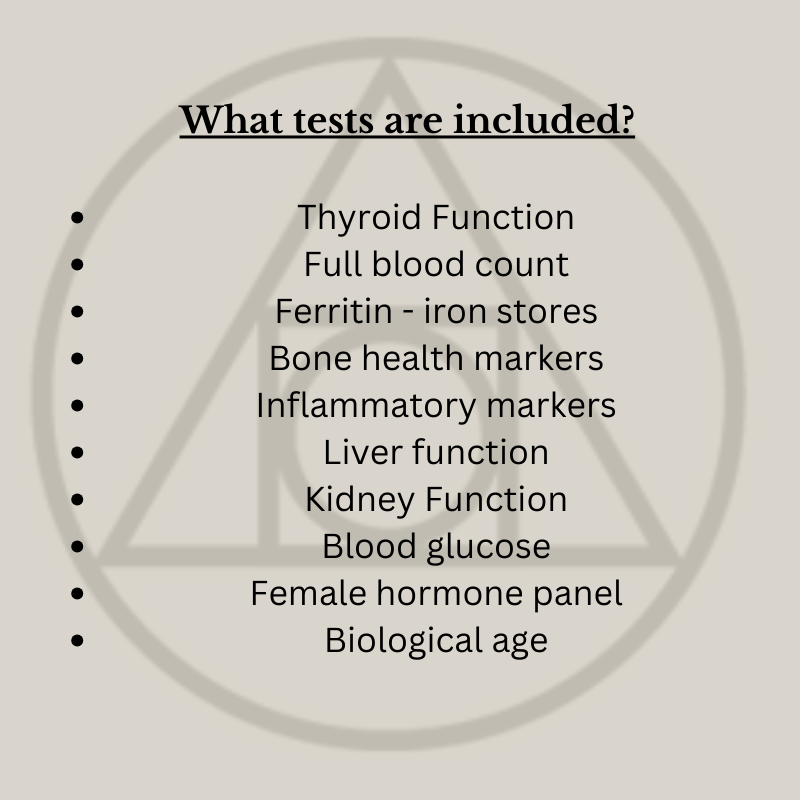
Based on your blood test results, our medical professionals will advise you on simple lifestyle changes you can make to stabilise these key health markers and reduce your risk of preventable disease. Put yourself first and take control of your health with this simple blood test.
If you’re thinking about taking our Well Woman test and use hormonal contraception, read this guide first to understand how your method may affect hormone results.
Biological Age
Our biological age test is a scientifically validated method that uses nine key blood markers to provide personalised insights into your health and ageing. Your biological age score is your biological age compared to your chronological (actual) age.
- Biological Age in years
- Age Comparison
Female Hormone Panel
This hormone analysis includes an oestrogen, testosterone and progesterone test, as well as an LH and FSH test. These sex hormones (in conjunction with adrenal and thyroid hormones) exert powerful effects on the body. Knowing the function and levels of these hormones is a positive step in creating hormone balance and achieving wellbeing.
This female hormone blood test includes:
- Oestradiol
- Progesterone
- LH
- FSH
- LH to FSH Ratio
- Testosterone
- Free Androgen Index
- SHBG
Thyroid Function
TSH (thyroid-stimulating hormone) helps assess thyroid function which plays a vital role in regulating metabolism, mood, energy levels, and menstrual health. Early detection of thyroid imbalances, even in the absence of symptoms, can prevent complications such as fatigue, weight changes, fertility issues, and mood disturbances.
Ferritin (Iron Stores)
This ferritin test is a measure of how much iron you have stored in your body. Low ferritin can be a sign of anaemia caused by iron deficiency. This test can also be used to investigate iron overload syndrome (haemochromatosis) which is an inherited condition where your body cannot remove excess iron.
Full blood count with differential
The full blood count is used as a broad screening test to check for such disorders as anaemia (decrease in red blood cells or haemoglobin), infection, and many other diseases. It is actually a group of tests that examine different parts of the blood. Results from the following tests provide the broadest picture of your health.
The full blood count measures:
- Red Blood Cell Count
- Haemoglobin
- Haematocrit
- MCV
- MCH
- MCHC
- RDW
- White Blood Cell Count
- Eosinophils
- Monocytes
- Lymphocytes
- Neutrophils
- Basophils
- Platelet Count
Bone Health
Calcium and vitamin D play a critical role in maintaining bone health. When you don’t get enough calcium, you increase your risk of developing osteoporosis and stress fractures. This blood test measures your total and corrected calcium levels, your vitamin D levels, and also checks for gout.
- Vitamin D
- Calcium
- Calcium (corrected)
- Urate
- Phosphate
- Magnesium
Inflammation
Inadequate recovery from exercise or overtraining can result in inflammation and muscle damage.
This blood test measures:
- Creatine Kinase
- High sensitivity CRP
Cholesterol
Lipids and cholesterol are fat-like substances in your blood. Some are necessary for good health, but when you have a high level of cholesterol in your blood, a lot of it ends up being deposited in the walls of your arteries and other vital organs. Lifestyle choices including diet, exercise and alcohol intake can all influence cholesterol levels and your risk of developing heart disease.
This cholesterol test measures:
- Total Cholesterol
- LDL
- HDL
- Triglycerides
- Non-HDL Cholesterol
Blood Glucose
Blood glucose is generated from carbohydrates and to use this fuel for energy your body needs insulin. With type 2 diabetes the cells either ignore the insulin or the body doesn’t produce enough of it. Glucose then builds up leading to problems with the heart, kidneys, eyes, nerves, and blood vessels.
This blood test measures:
Liver Function (LFTs)
Your liver processes drugs and alcohol, filters toxic chemicals, stores vitamins and minerals, and makes bile, proteins and enzymes. This liver function test examines enzymes and other markers for evidence of damage to your liver cells or a blockage near your liver which can impair its function.
This liver function test measures:
- Bilirubin
- ALP
- AST
- ALT
- GGT
- Albumin
- Total Protein
- Globulin
Kidney Function
Your kidneys filter waste from your body and regulate salts in your blood. They also produce hormones and vitamins that direct cell activities in many organs and help to control blood pressure. When the kidneys aren’t working properly, waste products and fluid can build up to dangerous levels creating a life-threatening situation.
This kidney function test measures:
- Sodium
- Potassium
- Chloride
- Bicarbonate
- Urea
- Creatinine
- eGFR