

Your thyroid may be small, but its job description is anything but.
This butterfly-shaped gland sits at the front of your neck and helps regulate your metabolism, energy, temperature, mood, digestion, heart rate, weight, hormones and much more.
So, when your thyroid is not functioning well, you usually feel it.
The trouble is, thyroid symptoms do not always arrive with a neat little label saying, “Hello, this is your thyroid.” Instead, you may feel exhausted, foggy, cold, moody, puffy, bloated or simply not like yourself.
Perhaps you have been told your blood tests are “normal”, but you feel anything but normal.
This is where we need to look a little deeper.
What was actually tested? What were the exact results? Where are those results sitting within the reference range and are they sitting within a more optimal functional range?
We also need to consider your iron levels, nutrient status, gut health, blood sugar, hormones, sleep, stress load and medical history. The thyroid does not work in isolation, and neither should we assess it that way.
What does the thyroid gland do?
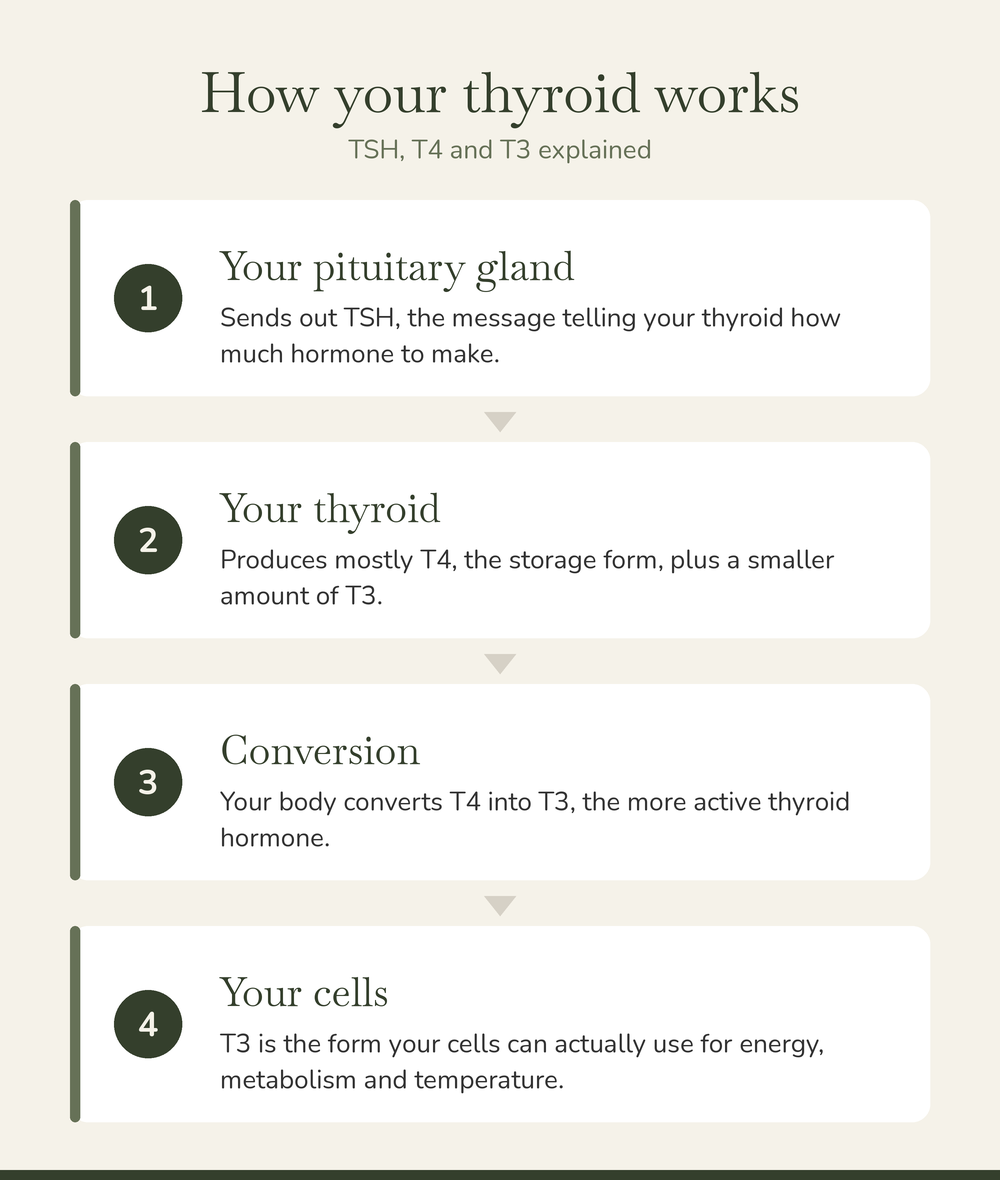
Your thyroid produces hormones called T4 and T3.
T4 is the main hormone released by the thyroid. You can think of it as the less active or “storage” form. Your body then needs to convert T4 into T3, the more active thyroid hormone that your cells can use.
TSH also plays an important role, but TSH is not actually a thyroid hormone. It is made by the pituitary gland in your brain and acts as a messenger, telling the thyroid how much hormone to produce.
Your thyroid hormones help influence:
- Energy production
- Metabolism
- Body temperature
- Mood and mental clarity
- Digestion and bowel movements
- Hair, skin and nails
- Menstrual cycle health
- Fertility
- Cholesterol balance
- Heart rate
- Weight regulation
- Muscle function
- Motivation and mental energy
That is quite a list for one very small gland.
When thyroid function slows down or becomes overactive, the body will usually start giving you clues. The challenge is recognising them and not dismissing everything as stress, age or “just hormones”.
Signs and symptoms of an underactive thyroid
Does it feel as though your body has quietly applied the handbrake?
An underactive thyroid, also known as hypothyroidism, means the body is not producing enough thyroid hormone, or that thyroid hormone is not being used efficiently.
Common signs may include:
- Fatigue, even after sleeping
- Difficulty getting going in the morning
- Weight gain or difficulty losing weight
- Feeling cold when everyone else seems comfortable
- Constipation
- Dry skin
- Hair thinning or hair loss
- Low mood or anxiety
- Brain fog
- Poor concentration or memory
- Fluid retention or puffiness
- Heavy or irregular periods
- Fertility challenges
- Low libido
- Muscle aches or weakness
- Slow heart rate
- High cholesterol
- Poor exercise recovery
- Feeling flat, sluggish or unmotivated
These symptoms can build gradually. You may not suddenly wake up one morning and think, “My thyroid is underactive.” You may simply notice that you are doing all the same things, but your body is no longer responding in the same way.
Signs and symptoms of an overactive thyroid
An overactive thyroid, also known as hyperthyroidism, is a little like having the accelerator stuck down. The thyroid is producing too much thyroid hormone, which can speed up several systems in the body.
Common signs may include:
- Racing heart or heart palpitations
- Feeling hot or sweaty
- Anxiety or feeling wired
- Unexplained weight loss
- Increased appetite
- Loose stools or frequent bowel movements
- Shaky hands
- Poor sleep
- Irritability
- Muscle weakness
- Light or irregular periods
- Hair thinning
- Difficulty sitting still
- Fatigue despite feeling wired
That last one can be particularly confusing. You may feel exhausted, but your body will not switch off.
Heart palpitations, unexplained weight loss, tremors, chest pain or severe anxiety-like symptoms should always be assessed promptly by a medical practitioner.
Why thyroid symptoms are often missed
Thyroid symptoms are very good mimics.
Fatigue is blamed on being busy. Weight gain is blamed on age. Mood changes are blamed on hormones. Brain fog is blamed on having too much to do. Heavy periods are normalised. Constipation is ignored. And suddenly, years have passed.
But your symptoms are not random. They are information.
That does not mean every symptom is caused by your thyroid, but it does mean your symptoms deserve to be properly investigated.
The important question is not simply:
“Is my thyroid in range?”
It is also:
- What was actually tested?
- Were Free T3 and Free T4 checked, or only TSH?
- What are the exact results?
- Where are those results sitting within the pathology range?
- Where are they sitting within a suggested functional optimal range?
- Have the results changed over time?
- Are thyroid antibodies present?
- Are nutrient deficiencies affecting thyroid hormone production?
- Is T4 being converted effectively into T3?
- Is stress affecting thyroid conversion?
- Are gut issues or inflammation affecting nutrient absorption?
- Are blood sugar, insulin or hormonal changes contributing to the symptoms?
A pathology report may use a wide reference range. Functional interpretation looks not only at whether you have managed to remain inside that range, but also at where you are sitting within it and how that result relates to your symptoms.
Suggested functional optimal thyroid ranges
As a general functional guide, I often like to see:
| Marker | Suggested functional range |
|---|---|
| TSH | 1–2 mIU/L |
| Free T4 | approximately 14–19 pmol/L |
| Free T3 | approximately 4.6–5.4 pmol/L |
| Thyroid antibodies | negative or as low as possible |
When fertility is the focus, I particularly like to see TSH sitting between 1 and 2 mIU/L.
These functional ranges are not diagnostic cut-offs, and they should not be used to change thyroid medication without professional guidance. Different laboratories use different testing methods, and pregnancy, age, medication and individual health history all influence interpretation. What matters most is the whole pattern—not chasing one “perfect” number in isolation.
Some of the quieter thyroid clues that are often missed include high cholesterol, heavy or irregular periods, fertility changes, low libido, constipation, puffiness, muscle aches, poor concentration and feeling cold when everyone else seems perfectly comfortable.
Individually, these symptoms can mean many things. Together, they may be asking us to look more closely.
What thyroid tests should you ask for?
A standard thyroid screen often includes TSH and little else.
TSH is useful, but TSH is produced by the pituitary gland—it is not actually a thyroid hormone.
Think of TSH as the message being sent to the thyroid. It tells us what the pituitary is asking the thyroid to do, but it does not directly tell us how much Free T4 and Free T3 are available.
Checking only TSH is a little like asking the manager whether the factory is running without looking at what is actually coming off the production line.
A more complete thyroid assessment may include:
- TSH
- Free T4
- Free T3
- Thyroid peroxidase antibodies, or TPO antibodies
- Thyroglobulin antibodies, or TgAb
- TSH receptor antibodies or TSI, when Graves’ disease is suspected
- Reverse T3, in selected cases
- Iron studies, including ferritin
- Vitamin D
- Vitamin B12
- Folate
- Zinc
- Selenium
- Urinary iodine, where appropriate
- Full blood count
- Liver function
- Fasting glucose and fasting insulin
- Cholesterol and triglycerides
Thyroid antibodies are particularly important because autoimmune thyroid activity, including Hashimoto’s, can be present before TSH, Free T3 or Free T4 move significantly outside the pathology range.
Urinary iodine testing can also be useful in the right situation. However, one spot urine sample can be heavily influenced by recent food and supplement intake, so it needs to be interpreted carefully. Repeated samples or a 24-hour urine collection may be more informative when assessing an individual.
Not everyone needs every test on this list. The tests should be chosen according to your symptoms, medical history, medication, family history and previous results.
The aim is not to order everything for the sake of ordering everything. It is to ask the right questions so you receive useful answers.
Can blood tests be normal but thyroid symptoms still be present?
Yes, this can happen.
Your body does not read the word “normal” on a pathology report and immediately decide to stop producing symptoms.
Sometimes the basic thyroid markers sit within the laboratory reference range, but the person still feels exhausted, cold, puffy, foggy or unlike themselves.
This does not automatically mean that the thyroid is the only issue. It means we need to look at the results in context.
Symptoms commonly associated with thyroid dysfunction may also be influenced by:
- Low iron or ferritin
- Low vitamin D
- Poor blood sugar control
- Insulin resistance
- Chronic stress
- Poor sleep
- Gut issues or inflammation
- Perimenopause or other hormonal shifts
- Low protein intake
- Under-eating
- Over-exercising
- Poor thyroid hormone conversion
- Autoimmune activity
- Medication timing or absorption
This is why I always want to know:
What was actually tested?
What were the exact numbers?
Are the results only technically inside the pathology range, or are they sitting within a more optimal functional range?
Have they changed since your previous test?
How do they fit with your symptoms and your complete health history?
A single result is one piece of information. It is not the whole story.
How can I boost my thyroid naturally?
Your thyroid is not a flat battery that can be jump-started with one supplement.
Supporting thyroid health means giving your body the nutrients and foundations it needs to produce, convert and use thyroid hormones effectively.
This may include:
- Eating enough protein
- Including mineral-rich whole foods
- Supporting gut health
- Managing stress
- Prioritising sleep
- Correcting nutrient deficiencies
- Supporting liver function
- Balancing blood sugar
- Reducing ultra-processed foods
- Avoiding extreme dieting
- Reducing unnecessary toxin exposure
- Testing rather than guessing
It is also important to make sure you are eating enough.
Long periods of under-eating, very low-calorie diets, excessive fasting or pushing exercise while exhausted can all place additional stress on the body. You cannot continually ask your body to do more while giving it less to work with.
The aim is to support thyroid function—not bully your body into producing more energy when it is already struggling.
How to fix your thyroid levels at home?
You cannot always “fix” thyroid levels.
Thyroid conditions need proper testing, interpretation and, in many cases, professional treatment.
However, there is a great deal you can do at home to build stronger foundations and support healthier thyroid function.
Eat regular meals with enough protein
Skipping breakfast, under-eating all day and relying on coffee to hold everything together is not a long-term thyroid plan.
Include a quality source of protein at each meal to support blood sugar, muscle mass, hormone production, recovery and energy.
Balance your blood sugar
Combine protein, healthy fats, vegetables and fibre-rich carbohydrates at your meals.
This can help reduce the energy crashes, sugar cravings and “I need something now” moments that often appear later in the day.
Prioritise sleep
Poor sleep affects appetite, insulin, stress hormones, energy regulation and how well you cope with everything else.
A consistent sleep routine is not very glamorous, but it is remarkably effective.
Reduce chronic stress
Long-term stress may affect thyroid hormone signalling and conversion, while also worsening sleep, digestion, blood sugar and hormonal symptoms.
You do not have to remove every source of stress from your life, that would be a rather ambitious! But you do need regular opportunities to recover from the busyness of life!
Check your nutrients
Low iron, selenium, zinc, iodine, vitamin D and vitamin B12 can affect how you feel and how your thyroid is functioning.
More is not always better, particularly with iodine and selenium. Test where appropriate and supplement according to what your body actually needs.
Support your gut
Gut issues or inflammation, poor digestion and altered bowel function may affect nutrient absorption and immune balance.
If you experience bloating, constipation, reflux, diarrhoea or food reactions, these symptoms may be relevant to the bigger picture.
Avoid extreme diets
Very low-calorie diets, long-term fasting and cutting carbohydrates too low can be stressful for some people, particularly women already experiencing fatigue, hormonal changes or thyroid symptoms.
If your thyroid levels are abnormal, combine professional guidance with nutritional and lifestyle support. It does not need to be one or the other.
How to bring my thyroid back to normal?
Bringing thyroid levels back to normal depends on why they are abnormal in the first place.
For one person, the issue may be iron or iodine deficiency. For another, it may be autoimmune activity, medication absorption, postpartum thyroiditis, pituitary dysfunction or an overactive thyroid.
This is why the first step is always to understand the driver.
Ask:
- Is this hypothyroidism or hyperthyroidism?
- Are thyroid antibodies present?
- Is there a nutrient deficiency?
- Is T4 being converted effectively into T3?
- Are gut issues affecting nutrient absorption?
- Is chronic stress part of the picture?
- Are hormones shifting due to perimenopause, pregnancy or postpartum changes?
- Is medication needed?
- Is medication being absorbed effectively?
- Are other health conditions affecting thyroid function?
Once you understand what is driving the imbalance, you can create a much more targeted plan.
That plan may include nutritional changes, supplementation, herbal support, gut support, lifestyle changes and professional treatment where needed.
This is much more useful than randomly adding iodine, selenium, herbs and Brazil nuts and hoping your thyroid appreciates the enthusiasm.
Nutrients that support thyroid health
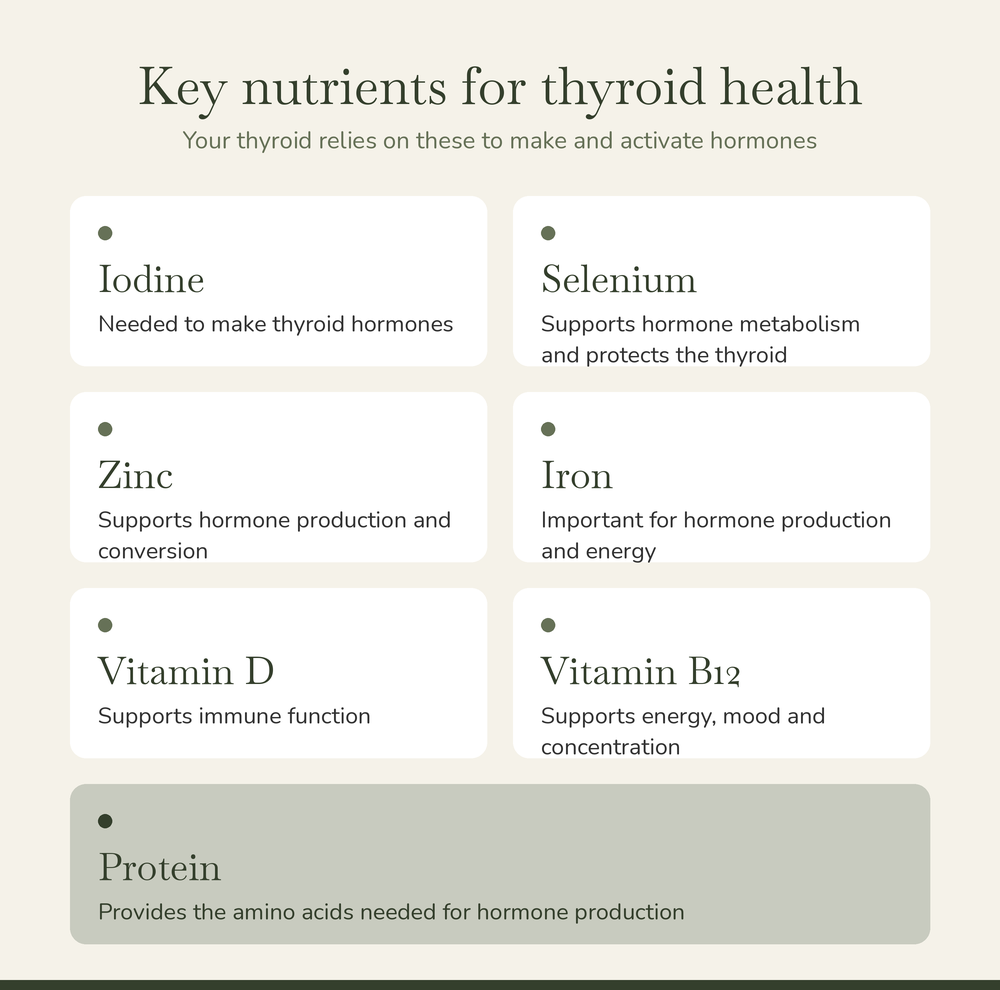
Your thyroid relies on several key nutrients to produce and activate thyroid hormones.
Iodine
Iodine is needed to make thyroid hormones. Food sources include seafood, dairy, eggs, iodised salt and some seaweeds.
However, more iodine is not always better.
Too much iodine can aggravate thyroid dysfunction in some people, particularly where autoimmune thyroid disease or an overactive thyroid is present. Iodine supplements and iodine-rich herbs should therefore be personalised.
Selenium
Selenium supports thyroid hormone metabolism and helps protect the thyroid from oxidative stress.
Food sources include seafood, eggs, meat and Brazil nuts.
Selenium is needed in relatively small amounts, so high-dose supplementation should not be used without a clear reason.
Zinc
Zinc supports thyroid hormone production, conversion, immune function and hormone balance.
Food sources include:
- Oysters
- Beef
- Lamb
- Pumpkin seeds
- Seafood
- Eggs
Iron
Iron is important for thyroid hormone production and energy.
Low ferritin may contribute to fatigue, hair loss, poor concentration, low mood, breathlessness and reduced exercise tolerance.
Food sources include red meat, poultry, seafood, eggs, legumes and leafy green vegetables.
Vitamin D
Vitamin D supports immune function and is commonly checked when thyroid antibodies or other autoimmune concerns are present.
Vitamin B12
Low B12 can contribute to fatigue, weakness, poor concentration, low mood and neurological symptoms that may overlap with thyroid symptoms.
Protein
Protein provides the amino acids needed for hormone production, liver function, blood sugar regulation, muscle maintenance and recovery.
Many people who feel flat and exhausted are simply not eating enough protein consistently.
The key word is support. Nutritional strategies can help the body function better. But they do not replace proper medical care when a thyroid condition is present.
Best foods to support thyroid health
A thyroid-supportive diet does not need to be complicated—or taste like punishment.
Focus on real food, quality protein, minerals, healthy fats, vegetables and steady blood sugar.
Helpful foods may include:
- Eggs, which provide protein, selenium, iodine and choline
- Seafood, which provides protein, iodine, zinc and omega-3 fats
- Oysters, which are particularly rich in zinc
- Pumpkin seeds, which provide zinc and magnesium
- Red meat or other iron-rich foods, particularly when iron or ferritin is low
- Leafy green vegetables, which provide magnesium and folate
- Berries, which provide antioxidants and fibre
- Extra virgin olive oil, which provides healthy fats
- High-fibre vegetables, which support digestion and bowel regularity
- Fermented foods, if you tolerate them
Brazil nuts do contain selenium, but the amount is extremely variable. Selenium content can vary considerably according to the soil, region and even the individual nut. Do not rely on Brazil nuts to provide a precise selenium dose.
Fermented foods may support gut health, but they do not suit everyone. If you have histamine intolerance, foods such as sauerkraut, kimchi, kombucha and other fermented products may worsen bloating, headaches, flushing, palpitations or other symptoms.
The goal is not perfection. It is nourishment, consistency and reducing unnecessary stress on the body.
What 5 foods should you avoid for thyroid health?
This is one of the most common thyroid questions, but the answer needs context.
There is no single thyroid diet that suits everyone. A food that works beautifully for one person may leave another person bloated, tired or staring suspiciously at their dinner.
Rather than unnecessarily removing half your diet, focus on the foods that are genuinely relevant to your symptoms and test results.
1. Ultra-processed foods
Foods high in refined oils, added sugars, additives and low-quality ingredients may contribute to poor nutrient intake, unstable blood sugar and inflammation.
They also tend to displace the foods your thyroid actually needs.
2. Excess sugar
High sugar intake may worsen blood sugar fluctuations, insulin resistance, energy crashes, cravings and inflammation.
Sugar may not be the root cause of a thyroid condition, but it can certainly make the overall picture harder to manage.
3. Gluten……if you are sensitive or if you have thyroid antibodies
Not everyone with a thyroid condition needs to avoid gluten.
However, if you have coeliac disease, a confirmed sensitivity or thyroid antibodies, it may be worth investigating whether gluten is contributing to your symptoms.
Thyroid antibodies do not automatically prove that gluten is a problem. Testing for coeliac disease and considering an appropriately supervised trial can be more useful than simply removing gluten indefinitely. Current research does not support a compulsory gluten-free diet for every person with non-coeliac Hashimoto’s disease.
4. Excess alcohol
Alcohol can affect sleep, blood sugar, liver function, hormones and inflammation.
Because the liver plays an important role in thyroid hormone metabolism, reducing alcohol may help support the broader thyroid picture.
5. High raw cruciferous vegetable intake
Cruciferous vegetables such as broccoli, cauliflower, kale, cabbage and Brussels sprouts are very nutritious foods. You do not need to become frightened of broccoli.
However, a very high intake of raw cruciferous vegetables may not be appropriate for some people, particularly when iodine intake is low.
Cooking or steaming cruciferous vegetables reduces their goitrogenic activity and often makes them easier to digest. Normal serves of cooked cruciferous vegetables are generally not a concern.
Should you avoid soy with thyroid issues?
Soy does not need to be avoided by everyone with thyroid issues.
The main consideration is medication absorption. Soy foods can affect how levothyroxine works for some people, particularly if eaten close to the medication dose. Keeping your soy intake reasonably consistent also makes medication monitoring easier.
Choose whole soy foods such as tofu, edamame or tempeh rather than relying heavily on highly processed soy products.
I also recommend choosing certified organic soy products where possible, as soy is one of the world’s most commonly genetically modified crops. For context, approximately 96% of soybean acreage in the United States used genetically engineered herbicide-tolerant varieties in 2025.
Organic soy is a sourcing preference rather than a substitute for looking at your complete diet, symptoms and thyroid results.
What about coffee and thyroid medication?
Coffee does not need to disappear from your life. It simply needs to wait its turn.
For standard levothyroxine tablets:
- Take the medication with water on an empty stomach.
- Wait 30–60 minutes before eating.
- Ideally, wait the full 60 minutes before having coffee or another caffeinated drink.
- Keep iron and calcium supplements at least four hours away from your thyroid medication.
- Multivitamins and mineral supplements containing iron, calcium or magnesium may also need to be separated.
- Other medications can affect absorption, so check the timing with your pharmacist or prescribing practitioner.
Taking the medication at roughly the same time and under similar conditions each day can help produce more consistent absorption and more reliable test results.
Gut health and thyroid health
Your gut and thyroid are not separate departments.
Your digestive system helps you break down food and absorb the iron, zinc, selenium, iodine, B vitamins and protein your thyroid needs. The gut also plays an important role in immune balance and inflammation.
If you experience bloating, constipation, diarrhoea, reflux, food reactions or a long history of gut issues, this may be relevant to your thyroid picture.
Gut issues that may be worth investigating include:
- Low stomach acid
- Poor bile flow
- Dysbiosis
- Food intolerances
- Constipation
- Intestinal inflammation
- Coeliac disease
- SIBO
- Parasites or other infections
This does not mean that every thyroid symptom begins in the gut. It means that persistent gut symptoms should not be dismissed when we are trying to understand why you still feel unwell.
You cannot separate thyroid health from the rest of the body. This is why a whole-body approach is often the most useful.
Stress, sleep and thyroid function
The thyroid communicates with the brain, nervous system, liver, gut, adrenal system and reproductive hormones.
Chronic stress can influence sleep, digestion, blood sugar, appetite and thyroid hormone conversion. Poor sleep can then worsen fatigue, cravings, mood changes and inflammation.
It can become a rather unhelpful loop.
Supporting your thyroid also means supporting your nervous system.
This may look like:
- Morning sunlight
- A consistent sleep routine
- Strength training without overtraining
- Walking
- Breathwork
- Reducing caffeine if you feel wired
- Eating enough during the day
- Creating a calmer pace
- Making space to recover
And yes, it is okay to say no, even with a smile 🙂
Sometimes the most powerful thyroid support is not another supplement. It is giving your body the safety, calm and security signals it has been missing.
Thyroid health and hormones
Thyroid symptoms often overlap with hormonal symptoms, particularly for women moving through their late 30s, 40s and beyond.
Low thyroid function may contribute to:
- Heavy periods
- Irregular cycles
- Fertility challenges
- Low mood
- Fluid retention
- Low libido
- Fatigue
- Hair loss
- Weight changes
At the same time, perimenopause, poor sleep, stress and insulin resistance can all produce symptoms that look remarkably similar to a thyroid problem.
This is why it is important not to assume, “It is just your age.”
If you feel exhausted, puffy, moody, cold, foggy or as though your body has suddenly changed the rules, it is worth looking deeper.
When should you get your thyroid tested?
Consider asking about thyroid testing if you experience:
- Ongoing fatigue
- Hair loss
- Unexplained weight changes
- Feeling cold most of the time
- Feeling unusually hot or sweaty
- Constipation
- Frequent or loose bowel movements
- Anxiety or heart palpitations
- Low mood
- Brain fog
- Heavy or irregular periods
- Fertility issues
- High cholesterol
- A family history of thyroid disease
- Another autoimmune condition
- Postpartum symptoms
- Neck swelling or thyroid nodules
Testing is particularly important when symptoms are persistent, worsening or affecting your quality of life.
Do not wait until you have every symptom on the list. Your body does not need to complete the entire questionnaire before it deserves attention.
Can supplements or herbs help thyroid health?
Supplements and herbs can be helpful when they are chosen for a genuine deficiency, a specific thyroid pattern or a clearly identified area that needs support.
They are less helpful when several products are thrown together under the rather hopeful label of “thyroid support”.
Common nutrients used in thyroid care may include:
- Selenium
- Zinc
- Iodine
- Iron
- Vitamin D
- Vitamin B12
- Magnesium
- Omega-3 fatty acids
- Myo-inositol, in selected cases
However, supplementing without testing or proper assessment can backfire.
Too much iodine can aggravate some thyroid conditions. Too much selenium can become toxic. Iron should only be used when it is genuinely needed. Supplements can also interact with thyroid medication or distort blood test results.
Herbs may also be useful, but they need to be carefully matched to the individual.
Rehmannia and Hemidesmus may be included by qualified herbal practitioners when immune or inflammatory factors are part of the thyroid picture.
Bladderwrack and giant kelp are iodine-rich seaweeds that may sometimes be considered where iodine deficiency has been properly established. However, they are not automatically suitable for people with an underactive thyroid and should be used very cautiously when thyroid antibodies, Hashimoto’s, Graves’ disease or other thyroid conditions are present.
The iodine content of seaweed products can be high and unpredictable, and excessive iodine can trigger either underactive or overactive thyroid dysfunction in susceptible people. Clinical evidence supporting bladderwrack as a thyroid treatment is also limited.
Research into herbal medicine for Hashimoto’s is developing, but current findings are still preliminary and do not justify self-prescribing herbs in place of proper thyroid care.
The best approach remains: test, do not guess.
The bottom line
Your thyroid affects almost every system in the body, so when it is not functioning well, you will often feel it in more than one place.
But thyroid health is not just about taking one supplement, removing one food or looking at one TSH result.
It is about asking better questions:
- What was actually tested?
- What are the exact results?
- Where are those results sitting within the range?
- Are they sitting within a suggested functional optimal range?
- Are thyroid antibodies present?
- Is there a nutrient deficiency?
- Is T4 being converted effectively into T3?
- Are gut issues, stress, sleep, hormones or blood sugar contributing?
- Is medication needed or not being absorbed effectively?
When you understand the driver, you can create a plan that is much more likely to help.
If you have been told your results are “normal” but you still do not feel right, it may be time to look a little deeper.
Your symptoms are not random. They are your body asking you to pay attention.
FAQ: Thyroid Health
How can I boost my thyroid naturally?
You can support your thyroid by eating enough protein, correcting nutrient deficiencies, supporting gut health, balancing blood sugar, reducing chronic stress, improving sleep and ensuring you have an appropriate intake of iodine, selenium, zinc, iron, vitamin B12 and vitamin D.
The aim is to support the body, not force the thyroid to work harder. Diagnosed thyroid conditions still require proper testing and medical care.
How do I fix my thyroid levels at home?
You may be able to support thyroid function at home through nutrition, sleep, stress reduction, gut support, regular meals and blood sugar balance.
However, you cannot always “fix” abnormal thyroid levels yourself. Testing is needed to determine whether the issue is hypothyroidism, hyperthyroidism, autoimmune activity, nutrient deficiency, medication absorption or another underlying condition.
What are 5 foods to avoid for thyroid health?
The five main areas to consider are:
- Ultra-processed foods
- Excess sugar
- Gluten, if you are sensitive or have thyroid antibodies
- Excess alcohol
- High raw cruciferous vegetable intake
The right approach depends on your symptoms, thyroid antibodies, iodine intake, gut health and individual food tolerance.
How do I bring my thyroid back to normal?
First, identify why your thyroid results are abnormal.
This may involve checking TSH, Free T4, Free T3, thyroid antibodies and key nutrients such as iron, vitamin D, zinc, selenium, iodine and vitamin B12.
From there, support may include nutritional changes, targeted supplements, herbs, lifestyle changes, medication or a combination of these.
What are the early warning signs of thyroid problems?
Early signs may include fatigue, unexplained weight changes, feeling unusually cold or hot, mood changes, hair loss, constipation, frequent bowel movements, brain fog, period changes, poor sleep, heart palpitations and changes in cholesterol.
Symptoms often develop gradually and may initially be blamed on stress, ageing or hormonal changes.
Can thyroid problems affect weight?
Yes.
Low thyroid function may make weight loss more difficult and can contribute to fluid retention and a slower metabolic rate. An overactive thyroid may cause unexplained weight loss.
However, weight changes can also involve insulin, blood sugar, sleep, stress, hormones, muscle mass, food intake and gut health. Weight should always be considered as part of a bigger picture.
Can thyroid problems affect mood?
Yes.
Thyroid imbalance may contribute to anxiety, low mood, irritability, poor concentration, reduced motivation and brain fog.
Mood symptoms should be considered alongside thyroid results, iron and B12 status, blood sugar, hormones, sleep and stress.
Should I get thyroid antibodies tested?
Thyroid antibodies may be worth testing if you have thyroid symptoms, a family history of thyroid disease, another autoimmune condition or ongoing symptoms despite basic thyroid results being within range.
TPO antibodies and thyroglobulin antibodies can help identify autoimmune thyroid activity such as Hashimoto’s. TSH receptor antibodies or TSI may be used when Graves’ disease is suspected.
You can order a thyroid test from our online store, just search thyroid testing.
Is iodine good for thyroid health?
Iodine is essential for thyroid hormone production, but more is not always better.
Some people may benefit from improving iodine intake, while others—particularly people with autoimmune thyroid conditions or an overactive thyroid—may react poorly to high-dose iodine.
Iodine supplementation should be based on your diet, symptoms, thyroid condition and appropriate testing.
What is the best diet for thyroid health?
The best diet for thyroid health is nutrient-dense, anti-inflammatory and supportive of steady blood sugar.
It should contain enough protein, healthy fats, fibre-rich carbohydrates, vegetables, iron, zinc, selenium and an appropriate amount of iodine.
It should also be personalised to your gut health, thyroid antibodies, nutrient status, symptoms and medication.
What is the optimal TSH for fertility?
From a functional perspective, I generally like to see TSH between 1 and 2 mIU/L when fertility is the focus.
Current thyroid guidance recommends a broader preconception treatment target of 0.5–2.5 mIU/L for women with infertility or recurrent miscarriage who are taking levothyroxine. Thyroid results during fertility treatment and pregnancy should always be interpreted by your practitioner.
What are optimal Free T3 and Free T4 levels?
As a suggested functional guide, I generally like to see:
| Marker | Suggested functional guide |
|---|---|
| Free T4 | approximately 14–19 pmol/L |
| Free T3 | approximately 4.6–5.4 pmol/L |
These are not diagnostic cut-offs. Your laboratory method, symptoms, medication, age, pregnancy status and complete thyroid pattern all need to be considered.
This article is for general education and does not replace individual medical assessment, diagnosis or treatment.
Naturopathic Services

Hormonal Support
Herbs, nutrition and lifestyle changes all help you overcome your hormone imbalances. Period pain, endometriosis, PCOS, fibroids and menopause can all be improved with the right treatment plan.

General Health
Natural medicine offers support for all ages from babies to the elderly, treating ageing, acne, autoimmune, gut health, weight loss and lots more.

Fertility Solutions
Preconception care enables you to reset your body and overcome unexplained infertility, miscarriage, PCOS, endometriosis, ageing eggs & improve sperm quality.





Kylie Armstrong
is a Medical Herbalist and Director of Tonic Natural Health in Newcastle, with 30 years of experience in the health industry and a Bachelor of Health Science in Complementary Medicine. Kylie’s focus is to find the drivers to people’s health concerns with the use of functional testing, including DNA analysis. She uses nutritional and herbal medicine along with lifestyle strategies to help people achieve their health goals. Her warm, practical approach helps clients better understand their bodies, address underlying contributors to health concerns, and build a foundation for lasting wellbeing.