
How often do you get your car serviced – every 6 months, every year perhaps – this preventive maintenance helps to prolong the life of your vehicle. But what about your most important asset – how often do you give yourself a work up? This blood test covers the essentials so you’re doing more than just kicking the tyres when it comes to your health.
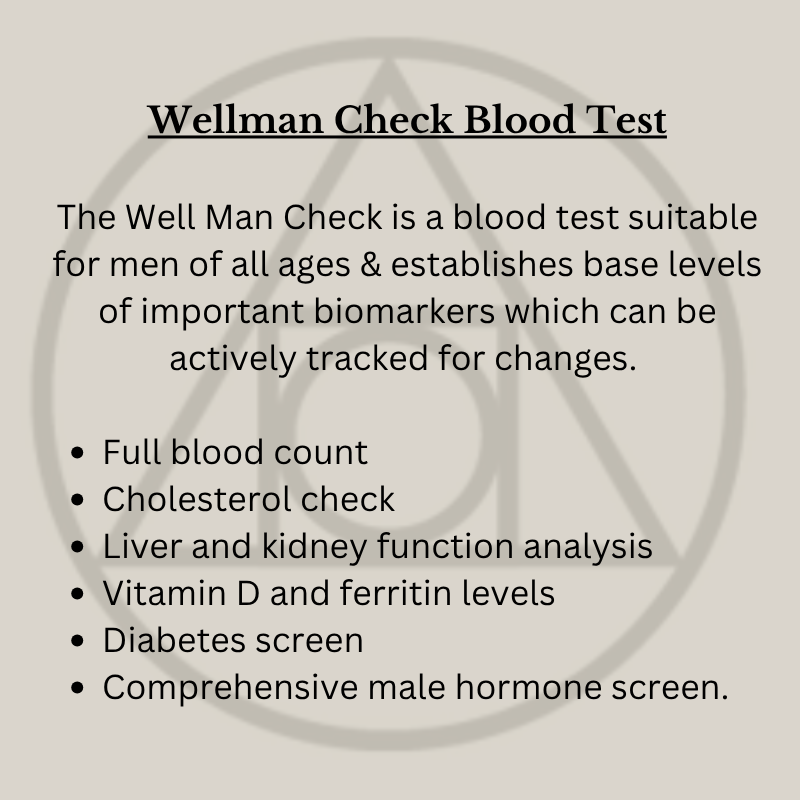
The Well Man Check is a blood test suitable for men of all ages. This blood test establishes base levels of important biomarkers which can be actively tracked for changes. It covers essential blood tests to gauge overall well-being including a full blood count, cholesterol check, liver and kidney function analysis, vitamin D and ferritin levels, and a diabetes screen. It also includes a comprehensive male hormone screen.
$249.00 incl. GST
Brand: iScreen
Used for: Bones Health, Cholesterol, Detoxification, Fatigue, Fertility, Healthy Ageing, Heart Health, Hormonal and Reproductive, Liver, Pain and Inflamation
Categories: Testing
Understanding the significance of a Blood test – well man check can lead to better health outcomes.
What is tested in the Well Man Check:
- Testosterone
- Free Testosterone
- Oestradiol (male)
- Testosterone: Oestradiol Ratio
- FSH
- LH
- SHBG
- Red Blood Cell Count
- Haemoglobin
- Haematocrit
- MCH
- MCHC
- White Blood Cell Count
- Eosinophils
- Monocytes
- Lymphocytes
- Neutrophils
- Basophils
- Platelet Count
- Total Cholesterol
- LDL
- HDL
- Triglycerides
- Non-HDL Cholesterol
- Fasting glucose
Bone Health
Calcium and vitamin D play a critical role in maintaining bone health. When you don’t get enough calcium, you increase your risk of developing osteoporosis and stress fractures. This blood test measures both your total calcium and corrected calcium levels, as well your 25-OHD vitamin D levels.
- Vitamin D
- Calcium
- Calcium (corrected)
- Phosphate
- Magnesium
- Bilirubin
- ALP
- AST
- ALT
- GGT
- Albumin
- Total Protein
- Globulin
- Sodium
- Potassium
- Chloride
- Bicarbonate
- Urea
- Creatinine
- eGFR
Inflammatory markers
Inadequate recovery from exercise or overtraining can result in inflammation and muscle damage.
- Creatine Kinase
- High sensitivity CRP
Iron stores
This ferritin test is a measure of how much iron you have stored in your body. Low ferritin can be a sign of anaemia caused by iron deficiency. This test can also be used to investigate iron overload syndrome (haemochromatosis) which is an inherited condition where your body cannot remove excess iron.
- Ferritin